
 Posts
Posts


Contact the Utah Senate Education Committee Members TODAY (Monday, Feb. 18) and ask them to VOTE NO ON HB118. Please be courteous, put NO on HB118 in the subject line, and write your own letter. Please do not copy and paste. They meet at 8am on Tuesday.
Senator Henderson - dhenderson@le.utah.gov
Senator Davis - gdavis@le.utah.gov
Senator Fillmore - lfillmore@le.utah.gov
Senator Grover - keithgrover@le.utah.gov
Senator Hillyard - lhillyard@le.utah.gov
Senator Millner - amillner@le.utah.gov
Senator Reibe - kriebe@le.utah.gov
Senator Stevenson - jwstevenson@le.utah.gov
#UTPOL #NOHB118
HB118: Incentives for Statewide Assessment Performance is sailing through the state legislature. The federal government wants 95% of Utah students (and their subgroups: ELL, Special Ed, etc) to take the former SAGE, now RISE/ASPIRE tests as part of compliance with ESSA (remember that federal legislation that everyone said would RETURN power to the states. Ha!).
So, in order to help with that federal compliance piece, we want to "help" Utah parents make the "correct" decision, and give them all kinds of reasons to have their kids submit to the federal requirement. In order to "incentivize" (aka make you comply "voluntarily"), the Utah legislature would like to allow teachers to give course credit for a student taking the state test. A test with no validity, reliability or predictability, that only 15 people have been allowed to see some portion of, but hey, the feds want it, why wouldn't parents want to go along?
The reason for this is, in part, to not lose federal dollars under ESSA. However, there is NO RISK of losing federal dollars, and ESSA specifically states that it protect parent rights to opt out:
1111(b)(2)(K): “RULE OF CONSTRUCTION ON PARENT RIGHTS.—
“Nothing in this paragraph shall be construed as preempting a State or local law regarding the decision of a parent to not have the parent’s child participate in the academic assessments under this paragraph.”
Some concerns with HB118:
1. Every year, I receive many letters, private messages, texts, and tags on facebook posts from parents who have seen their children bullied for being opted out of state testing. One young lady, who was quite shy, was told that instead of taking the SAGE test, she would be required to present an oral report in class about why she was opted out of SAGE. This is just the tip of the iceberg. Children are having their parents' ideas and opinions on this subject denigrated in class in front of other students. Without exception, my children have been told, every year, by different teachers in different classes, that their parents do not understand and are uninformed as to the value and benefit of the state tests. Do we really believe it is correct to undermine parental authority and to alienate child from parent all so a student will contest their parent's decision about a state test? Is state testing really that important on any level that it demands the mockery of a parent's decision about the best interest's of their child? Agree or disagree with opting out, mocking a child's parent is completely inappropriate, especially in a state that states a parent is legally the primary person responsible for a child's education and that the state should be "secondary and supportive." It is currently illegal to incentivize this behavior, as well as to give rewards for testing. Why would we want to make it legal?
2. Special Ed students (other than the 1% most cognitively disabled) are required to take the state test for their age and not for their developmental level. For example, an 8-year-old who reads on a 1st grade level would take the 3rd grade test. Because these are "computer -adaptive" tests, some people, mistakenly, believe that they will "adapt" to present First Grade material to the 3rd grader taking the test. This is not correct. The 3rd grade test contains only variations on 3rd grade material. So, the child reading at a 1st-grade level, will either just hit submit through the entire test (best case) or will struggle (no time limit) to try to understand things far above her ability. This will be demoralizing and serve absolutely no purpose. The teacher, parent and everyone else already knows the child doesn't read or do math on a 3rd grade level. What other information would be gleaned from subjecting this child to that test? Additionally, I have received reports from Special Ed teachers who have been told they are not to let parents know their children can be opted out. There is great pressure placed on Special Ed to get that 95% participation rate, since they are one of the groups mentioned specifically in the federal law. Many parents and teachers of students with special needs are greatly relieved when they realize their child can be opted out, under state law, without (currently) any negative consequences to their child or their school.
3. No money at stake. Utah, originally, requested a waiver from the feds for the 95% participation rate, due to our state law. Since the feds rejected this waiver, HB118 was introduced to up our participation rate from 94% to 95%, proving that Utah is only a vassal state to the master that is the US Department of Education. However, in an October State Board of Education meeting, the Board Members were told no money was at stake, and we only need create another line item in our reporting (posted on our website, not sent to the feds) to show the federal calculation along with the state calculation. Additionally, for those (estimated at 5) schools who fall into the bottom 5% of Title 1 schools due to lower participation rates, the State Board can decide what "remediation" if any is necessary. This way, the state doesn't spend money to "remediate" schools that don't need remediation because their only "flaw" was having more kids opting out than what the feds like. Here is information from the October State Board meeting on this subject, from Board Member Alisa Ellis: https://youtu.be/nSdQ0jkhiqc
It would be well worth your time to watch the entire segment but if you don't have time here are a couple of places that are critical.Beginning at 6:25-As our opt-out rate increases above the 95% participation threshold, the federal government requires that we change our calculation. In our board meeting the Superintendent estimates about 5 schools would be affected in the state.We would look at the lowest 5% performing schools in the state and then the change in calculation would only occur if any of those schools had more than 5% opt out.It's also important to note that we aren't even required to send the calculations to the Federal government. We simply have to run a report and post it for public consumption.Beginning at 17:50 -I asked if our opt out numbers continue to climb if we are at risk for losing federal $$$. The answer was no.
More information on opting out, nationally, can be found here: http://www.fairtest.org/federal-law-and-regulations-opting-out-under-essa
Write the Senate ed committee members and your senator, as well. Then share this with every friend and neighbor who wants to maintain parents as primarily responsible for their child's education and to keep bullying of kids who opt out illegal.
Showing posts with label Policies. Show all posts
Showing posts with label Policies. Show all posts
Monday, February 18, 2019


Monday, October 8, 2018
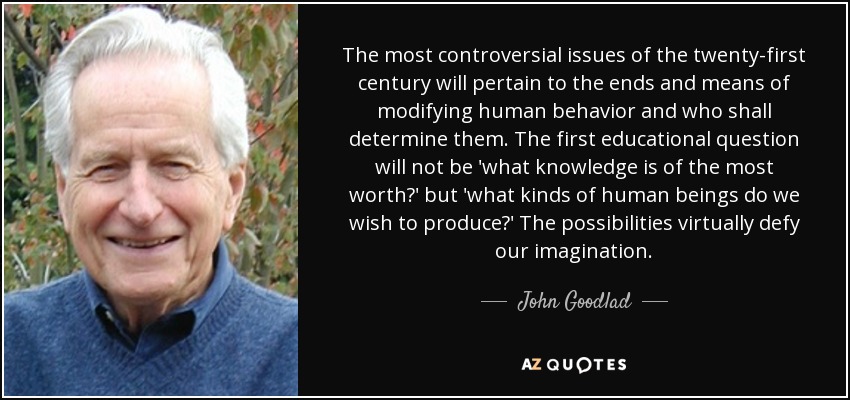
"What Kinds of Human Beings Do We Wish to Produce?"
October 9, 2018: Study Session/Board Meeting at the District Office
1. Study Session (4pm): Social Emotional Learning
2. Board Meeting (6pm): Includes an agreement with Orem City for the School Resource Officers. (pp.79-87)
All meetings are open to the public. Public comment is available at every Board Meeting.
SOCIAL EMOTIONAL LEARNING
The most controversial issues of the twenty-first century will pertain to the ends and means of modifying human behavior and who shall determine them. The first educational question will not be 'what knowledge is of the most worth?' but 'what kinds of human beings do we wish to produce?' The possibilities virtually defy our imagination. --John Goodlad
There are so many buzzwords in education these days: 21st Century Learning, Social-emotional Learning (SEL), GRIT, the 4-C's (or the 6-C's), Response to Intervention, Critical Thinking, STEM, Project-based learning, Guide-on-the-side, Engineering Design Model, Workforce, etc. etc. etc. It's hard to keep up with them all or even understand what they all mean.
Social Emotional Learning or SEL first really made its appearance (from my perspective) in the Federal re-authorization of No Child Left Behind, called ESSA. In additional to academic measures, the Feds want us to use "non-cognitive" measures to assess how well schools are doing. It came to prominence with a focus on GRIT, and a TED talk by a professor who wrote a book on the subject. Now SEL is everywhere. The idea is that kids should learn, not just academics, but the skills and dispositions to be successful in the workforce (aka the 21st Century because human nature magically shifted in 2001, I guess). So, the purpose of schools has shifted from basic academics to creating a comprehensive person. The only problem is whose vision of that "correct human being" is being implemented? And is that really what we want from public education? Who should determine what kind of human being your child should become? Who is the "we" in 'what kinds of human beings do we wish to produce'? (Does the word produce come across as a bit creepy to anyone else?)
On one hand, I can appreciate and understand that we want kids to be well-rounded, kind-hearted, honest, and sympathetic. On the other, what is the purpose of public schools? Well that goes back to the age-old debate. Everyone thinks of it as something different, and way back when, our district mission statement included "democracy" as the purpose of schools. I disagree. I think for public schools, the purpose should be academic excellence. Everything else, should be left to the individual child and his/her family. That's not to say that teachers don't teach, especially by example, kindness and honesty. They do. But that's just part of being a good human being, right? When we focus on dispositions, we necessarily remove our focus from reading, writing, and [a]rithmetic. Supposedly, we are doing both academics (what we are calling the Right Side of the Pyramid) as well as SEL (the Left Side of the Pyramid). Our goal should be to educate, not to tell you what the purpose of that education is supposed to be.
The other problem I see, is who decides what the appropriate dispositions are for our children to possess? And what are those definitions? I've found, too often, sadly, that when someone uses a word that sounds good, their meaning may be completely different from my own.
In Alpine, we are focused on the 6 C's (4 of which are borrowed from the 21st Century Learning 4 C's). They are: Communication, Critical Thinking, Creativity, Collaboration, Character, Citizenship. All sound great. But what of the child who is introverted and Collaboration means lots of group-work projects? She might do very well academically IF she's allowed to work alone, but in a group? Not so much. She is learning that she must go along with the group, and the knowledge she gains isn't as important as the "collaboration" with others. It also puts young children in a very difficult position if they disagree with how something is going or what is being said. Citizenship: what kinds of student advocacy do you want your child engaged in? What if those citizenship perspectives differ from those of your family? And Critical Thinking (also known as Higher-order thinking) has at least one definition in education that I would whole-heartedly disagree with.
...a student attains 'higher order thinking' when he no longer believes in right or wrong". "A large part of what we call good teaching is a teacher´s ability to obtain affective [emotional] objectives by challenging the student's fixed beliefs. ...a large part of what we call teaching is that the teacher should be able to use education to reorganize a child's thoughts, attitudes, and feelings. --Benjamin Bloom
In short, it's wrong to be rewarding personality types instead of the knowledge that every child is capable of acquiring. It's also wrong to possibly, modify a child's thoughts, attitudes and feelings, not through reason and the discovery of truth but by using emotional objectives to challenge their 'fixed beliefs', those beliefs instilled in them by their families.
If you agree with this shift, then you will be pleased. If not, you may want to speak up about this dilution of academics with dispositions.
AGREEMENT WITH OREM CITY FOR SCHOOL RESOURCE OFFICERS
Take a quick look at the agreement (https://drive.google.com/drive/folders/1b8lY2ExcO10gchOSZ2hxb1U_whvH2_M2) I have the following concerns.
1. Restorative Justice: Restorative Justice, as I understand it, is where the person who is at fault is asked to "restore" what they broke in some way. In some instances, this makes sense. If you spray paint graffiti, it makes sense to have you repaint whatever you vandalized. However, if you physically assaulted someone, the victim of your assault may be traumatized by further interaction. In this case, Restorative Justice isn't a good idea. AND, it may not be the best idea as a first recourse in even situations like graffiti. It is interesting to note that the Parkland Shooter fell through the cracks due to restorative justice.
Excerpt from this article:
Schools also began replacing more traditional methods of discipline with student-led mentoring programs ... as well as “restorative justice” programs, a Breakfast Club-like fantasy where, instead of punishment, the bully or the violent offender engages in talk therapy and group discussions with the kid he or she has been harassing to seek reconciliation.
That sounds like great fun for the victim.2. Reading Miranda Rights for those 14 and up without requiring a parent to be present. I don't know about you, but if my kid is in the kind of trouble where he or she is being read their Miranda Rights, I think I should be present. Also, what about children who have mental disabilities that, while chronologically 14 years old, mentally are much younger? Shouldn't their parents be present?
3. Student Privacy. FERPA is the Federal School Data Privacy Act from 1974 that is all but worthless. Anything that occurs at school is subject to FERPA, whether health-related or juvenile-justice related. That means these records can be shared with anyone for "an educational purpose" without parental knowledge or consent.
I would be curious to know your thoughts on these issues.
Tuesday, March 15, 2016
A Thankful Heart Is the Greatest Virtue: Informed and Involved
'A thankful heart is not only the greatest virtue, but the parent of all other virtues.' --Cicero

I want to start by thanking all of you for your support throughout these past 6 years for the principles that I have tried to stand for. It was especially felt during this past legislative session with the numbers of calls, texts, and emails that were sent to our legislators. I am grateful to all of our legislators, even those I vehemently disagree with, for taking the many hours of time and energy and the mocks and scorns of the populace that they are oath-bound to represent. But I am even more grateful to you, the many moms and dads, everyday people, who are willing to take a little time out of your day to defend the family, protect parents' rights, and demand that parents and teacher decide what knowledge is of most worth.
I am writing to once again enlist your aid: To Run for Public Office or to Support Another Who Shares Your Principles. You can FILE to run up to THIS THURSDAY, March 17, at the County Elections Office (in Utah County, that's in Provo).
The point of running for office is about the principles that you are willing to stand up and defend. Do you want to defend the family? Do you want to defend individual freedom? Do you want to support parents and teachers deciding what knowledge is of most worth to pass along to our children? If so, you qualify. The goal of a government 'of the people, by the people, and for the people' is that the people are the ones who are involved, overseeing it and running it. If you haven't served as a state or county delegate, if you haven't attended a caucus meeting, if you haven't filed to run for office, think seriously about doing so. You are who we need in the country, not those who seek office for power or glory, but who seek it to maintain freedom and liberty.
FIRST, for school board. Abraham Lincoln said, "The philosophy of the school room in one generation is the philosophy of the government in the next." I would argue that who is elected to Local and State School Board positions could have a greater impact on the direction of our country than the president. (And as the Founders understood it, it really should.)
Alpine School District, ASD4 (PG/Lindon), ASD6 (Lehi), ASD7 (East Orem). The only incumbent seeking re-election is Scott Carlson in ASD6. I do not believe that any office should go uncontested, and certainly, any office where those running do not share the vast majority of your principles. If you have ever thought, "Why don't we have anyone I like running for office", that is a call to arms. You should be running.
In our predominantly LDS culture, we are used to taking upon ourselves leadership responsibilities and rotating that responsibility around to different members of the ward family. In a similar manner, our Founders felt that public office should be rotated around to the different community members as a sense of civic obligation and personal duty. It was assumed that most people would be willing and able to serve 2 - 4 year terms, and then return home to their families, their farms, and their livelihoods. Politics was never supposed to be a professional occupation. And if you've ever wondered about why we are headed in the direction that we are, I would emphatically argue it is BECAUSE average people don't run for public office. Many years ago, William F. Buckley, paraphrasing, said that he'd rather be governed by the first 535 names in the New York Phonebook than by the members of Congress. And yet, THAT is exactly what our Founders envisioned: everday people, representing their neighbors, their families, and their friends.
Opportunities for public service are just that, opportunities for service. Here are several that I would ask you to seriously consider.
1. Attend your party's caucus meeting on March 22. (An excellent article on the caucus is here.)

2.Vote in the Presidential Preference Poll (this IS the presidential primary for Utah).
3. Run for State or County delegate at your precinct or support someone who shares your principles.
4. Run for Public Office yourself, unless you find someone who shares your principles. Then campaign on their behalf. (Money is good, but time is better.)
Some Public Offices that are up for election this year. For more information, go here.
Local:
ASD 4, 6, and 7: If you are in one of those areas, think seriously about running for office.
County:
State Senator
State House
Utah County Commission, Seat C
State:
State School Board (My specific area is not up, but half the State Board seats are. In UT County: 11, 12, and 13)
State Attorney General
State Auditor
State Treasurer
Governor/Lt. Governor
Federal:
US House of Representatives (all seats)
US Senate (1 seat)
President/Vice-President
Most people are unaware that every two years 100% of the US House of Representatives and 33% of the US Senate are up for election.
In Utah, 100% of the State House of Representatives and 50% of the State Senate are up for election.
We, the People, have the opportunity to completely change the direction things are going every two years, or to reinforce what is being done. And sometimes we reinforce it by our apathy.
Informed and Involved is the only way to maintain freedom. And it isn't once every four years by voting for president. The most important elections are those closest to you! It is our responsibility to be informed and then to be involved.
Thomas Jefferson said, "If a nation expects to be ignorant and free,.. it expects what never was and never will be. If we are to guard against ignorance and remain free, it is the responsibility of every American to be informed."


I want to start by thanking all of you for your support throughout these past 6 years for the principles that I have tried to stand for. It was especially felt during this past legislative session with the numbers of calls, texts, and emails that were sent to our legislators. I am grateful to all of our legislators, even those I vehemently disagree with, for taking the many hours of time and energy and the mocks and scorns of the populace that they are oath-bound to represent. But I am even more grateful to you, the many moms and dads, everyday people, who are willing to take a little time out of your day to defend the family, protect parents' rights, and demand that parents and teacher decide what knowledge is of most worth.
I am writing to once again enlist your aid: To Run for Public Office or to Support Another Who Shares Your Principles. You can FILE to run up to THIS THURSDAY, March 17, at the County Elections Office (in Utah County, that's in Provo).
The point of running for office is about the principles that you are willing to stand up and defend. Do you want to defend the family? Do you want to defend individual freedom? Do you want to support parents and teachers deciding what knowledge is of most worth to pass along to our children? If so, you qualify. The goal of a government 'of the people, by the people, and for the people' is that the people are the ones who are involved, overseeing it and running it. If you haven't served as a state or county delegate, if you haven't attended a caucus meeting, if you haven't filed to run for office, think seriously about doing so. You are who we need in the country, not those who seek office for power or glory, but who seek it to maintain freedom and liberty.
FIRST, for school board. Abraham Lincoln said, "The philosophy of the school room in one generation is the philosophy of the government in the next." I would argue that who is elected to Local and State School Board positions could have a greater impact on the direction of our country than the president. (And as the Founders understood it, it really should.)
Alpine School District, ASD4 (PG/Lindon), ASD6 (Lehi), ASD7 (East Orem). The only incumbent seeking re-election is Scott Carlson in ASD6. I do not believe that any office should go uncontested, and certainly, any office where those running do not share the vast majority of your principles. If you have ever thought, "Why don't we have anyone I like running for office", that is a call to arms. You should be running.
In our predominantly LDS culture, we are used to taking upon ourselves leadership responsibilities and rotating that responsibility around to different members of the ward family. In a similar manner, our Founders felt that public office should be rotated around to the different community members as a sense of civic obligation and personal duty. It was assumed that most people would be willing and able to serve 2 - 4 year terms, and then return home to their families, their farms, and their livelihoods. Politics was never supposed to be a professional occupation. And if you've ever wondered about why we are headed in the direction that we are, I would emphatically argue it is BECAUSE average people don't run for public office. Many years ago, William F. Buckley, paraphrasing, said that he'd rather be governed by the first 535 names in the New York Phonebook than by the members of Congress. And yet, THAT is exactly what our Founders envisioned: everday people, representing their neighbors, their families, and their friends.
Opportunities for public service are just that, opportunities for service. Here are several that I would ask you to seriously consider.
1. Attend your party's caucus meeting on March 22. (An excellent article on the caucus is here.)

2.Vote in the Presidential Preference Poll (this IS the presidential primary for Utah).
3. Run for State or County delegate at your precinct or support someone who shares your principles.
4. Run for Public Office yourself, unless you find someone who shares your principles. Then campaign on their behalf. (Money is good, but time is better.)
Some Public Offices that are up for election this year. For more information, go here.
Local:
ASD 4, 6, and 7: If you are in one of those areas, think seriously about running for office.
County:
State Senator
State House
Utah County Commission, Seat C
State:
State School Board (My specific area is not up, but half the State Board seats are. In UT County: 11, 12, and 13)
State Attorney General
State Auditor
State Treasurer
Governor/Lt. Governor
Federal:
US House of Representatives (all seats)
US Senate (1 seat)
President/Vice-President
Most people are unaware that every two years 100% of the US House of Representatives and 33% of the US Senate are up for election.
In Utah, 100% of the State House of Representatives and 50% of the State Senate are up for election.
We, the People, have the opportunity to completely change the direction things are going every two years, or to reinforce what is being done. And sometimes we reinforce it by our apathy.
Informed and Involved is the only way to maintain freedom. And it isn't once every four years by voting for president. The most important elections are those closest to you! It is our responsibility to be informed and then to be involved.
Thomas Jefferson said, "If a nation expects to be ignorant and free,.. it expects what never was and never will be. If we are to guard against ignorance and remain free, it is the responsibility of every American to be informed."

Wednesday, October 28, 2015
2015 Community Meetings and Attendance Follow-up
Two Issues:
1. 2015 Community Meetings
2. Follow-up from Oct. 27, 2015 Attendance Discussion with Judge Bazelle
2015 Community Meetings
District personnel will be holding community meetings at every school in the district over the next month. The purpose is to provide information about the projects that were part of the 2011 bond. Where we are, and what was done. It is also to provide information about our growth situation and to provide the community information about how we plan to address those needs. One of the options would be a bond next year. The board has not yet decided on a direction, but this is a good opportunity to see what the concerns are, and to voice your opinion on these issues.
In my area, two of the schools, Ridgeline and Highland, have already had their meetings. The rest are as follows.
Thursday, Oct. 29, 10:00 am: Lone Peak HS
Thursday, Oct. 29, 1:30 pm: Mountain Ridge JH
Thursday, Oct. 29, 1:30 pm: Timberline Middle
Thursday, Nov. 5, 1:30 pm: Deerfield Elementary
Friday, Nov. 6, 10:00 am: Cedar Ridge Elementary
Thursday, Nov. 19, 10:00 am: Westfield Elementary
Thursday, Nov. 24, 10:00 am: Alpine Elementary
Here is a link to all the meetings taking place in the district. Feel free to attend whichever one is the most convenient for you. https://drive.google.com/file/d/0BzUjUSlTes-4QlZEV1dHZ2xYc0k/view?usp=sharing I ask that you share this information on the community meetings with at least 5 of your neighbors.
To provide follow-up on the meeting, please use this link: https://docs.google.com/forms/d/1pqI5BzSttELzPm0dED0frhCltcf05U5H1AWr75bc48M/viewform
Attendance Policy Follow-up
Quite a few people showed up for the Study Session last Tuesday for the discussion with Judge Bazelle about our Attendance Policy. We had 9 people comment in the public comment portion of the Board Meeting, 7 of those specifically on the current Attendance Policy. But all commenters, including those who came about the Cherry Hill ALL program, were in support of keeping our current attendance policy as it is. I appreciated all the comments from my fellow board members about keeping parents in charge. The Judge also said that it has been shown that the Judicial system should be the path of last resort because those that can be helped out prior to getting into that system are better off. She would prefer that the schools work through a non-judicial process for helping any children that might need it.
It is important to note that the Obama Administration has an attendance initiative. And a lobbying organization, Attendance Works, regularly lobbies the state legislature to pass laws tracking chronic absenteeism, not just truancy. It is important to keep this in mind and to follow these developments. I greatly appreciated the comments last evening because it will help our Board should we need to weigh in on any proposed attendance legislation come from the State or the Feds.
One final note on attendance, most studies either do not include parent-excused absences or they don't separate them out to see whether there is any difference between parent-excused absences and truancy on academic outcome. Of the three studies that I have found that do delineate between excused absences and truancy, there was not any correlation between excused absences and performance. None! In fact, one study said they couldn't tell whether the academic performance drove the absence or the absence drove the academic performance. In short, if a parent is excusing their kids, there is no risk, despite what you are hearing. Please confirm this for anyone who is concerned that there is no difference. There is no difference for the majority of the studies because they failed to track excused absences separately from truancy.
1. 2015 Community Meetings
2. Follow-up from Oct. 27, 2015 Attendance Discussion with Judge Bazelle
2015 Community Meetings
District personnel will be holding community meetings at every school in the district over the next month. The purpose is to provide information about the projects that were part of the 2011 bond. Where we are, and what was done. It is also to provide information about our growth situation and to provide the community information about how we plan to address those needs. One of the options would be a bond next year. The board has not yet decided on a direction, but this is a good opportunity to see what the concerns are, and to voice your opinion on these issues.
In my area, two of the schools, Ridgeline and Highland, have already had their meetings. The rest are as follows.
Thursday, Oct. 29, 10:00 am: Lone Peak HS
Thursday, Oct. 29, 1:30 pm: Mountain Ridge JH
Thursday, Oct. 29, 1:30 pm: Timberline Middle
Thursday, Nov. 5, 1:30 pm: Deerfield Elementary
Friday, Nov. 6, 10:00 am: Cedar Ridge Elementary
Thursday, Nov. 19, 10:00 am: Westfield Elementary
Thursday, Nov. 24, 10:00 am: Alpine Elementary
Here is a link to all the meetings taking place in the district. Feel free to attend whichever one is the most convenient for you. https://drive.google.com/file/d/0BzUjUSlTes-4QlZEV1dHZ2xYc0k/view?usp=sharing I ask that you share this information on the community meetings with at least 5 of your neighbors.
To provide follow-up on the meeting, please use this link: https://docs.google.com/forms/d/1pqI5BzSttELzPm0dED0frhCltcf05U5H1AWr75bc48M/viewform
Attendance Policy Follow-up
Quite a few people showed up for the Study Session last Tuesday for the discussion with Judge Bazelle about our Attendance Policy. We had 9 people comment in the public comment portion of the Board Meeting, 7 of those specifically on the current Attendance Policy. But all commenters, including those who came about the Cherry Hill ALL program, were in support of keeping our current attendance policy as it is. I appreciated all the comments from my fellow board members about keeping parents in charge. The Judge also said that it has been shown that the Judicial system should be the path of last resort because those that can be helped out prior to getting into that system are better off. She would prefer that the schools work through a non-judicial process for helping any children that might need it.
It is important to note that the Obama Administration has an attendance initiative. And a lobbying organization, Attendance Works, regularly lobbies the state legislature to pass laws tracking chronic absenteeism, not just truancy. It is important to keep this in mind and to follow these developments. I greatly appreciated the comments last evening because it will help our Board should we need to weigh in on any proposed attendance legislation come from the State or the Feds.
One final note on attendance, most studies either do not include parent-excused absences or they don't separate them out to see whether there is any difference between parent-excused absences and truancy on academic outcome. Of the three studies that I have found that do delineate between excused absences and truancy, there was not any correlation between excused absences and performance. None! In fact, one study said they couldn't tell whether the academic performance drove the absence or the absence drove the academic performance. In short, if a parent is excusing their kids, there is no risk, despite what you are hearing. Please confirm this for anyone who is concerned that there is no difference. There is no difference for the majority of the studies because they failed to track excused absences separately from truancy.
Friday, October 23, 2015
Attendance Policy
This Tuesday, Oct. 27 @ Deerfield Elementary (4353 West Harvey Blvd, Cedar Hills), the Board Study Session will include a discussion with Juvenile Court Judge Bazelle about the current attendance policy. The Study Session begins at 4:00pm, and the Judge will be there at 4:30 pm.
The regular board meeting with public comment will take place at 6:00 pm.
Why should you care? One major issue that keeps coming up from parents and taxpayers is attendance. I have had many complaints about the strictness of our former policies, and the inconsistencies of the application of our current policy. Some parents have sent their kids to a different school specifically because of the harshness of some of the attendance policies. I have not had anyone complain that our attendance policies are too lax...until now.
State Law allows certain things as valid excuses: illness, death in the family, etc. It also allows "any other excuse established as valid by a local school board, local charter board, or school district." In our district, our policy says, "The Alpine School District Board of Education has determined that the parent or legal guardian of a student can excuse an absence for reasons they deem necessary."
At our board meeting on Sep. 22, Board Member Taylor reported that in a meeting with Judge Noonan (who oversees that Orem area), concerns were raised that our policy is working great for about 95% of our students, but there are 5% that they can't help because our policy is too lenient. (To listen to the audio, go to http://board.alpineschools.org/2015/09/18/september-22-2015-board-meeting/, click on 'Additional Media', and the second audio file is the Board Meeting. The report begins about 1 hour into the meeting.)
While I have found that our district policy is not being implemented as stated, that is more of an internal issue. However, at the end of the day, we passed the attendance policy in order to support parental rights. We do no one a service when we try to insert ourselves into the realm of the family, prematurely, where we actually do not belong.
In other states where there has been no distinguishing between excused absences and truancy, many children have become 'collateral damage' to a system that is hoping to make sure that increased attendance is the ultimate good. But how many innocent parents and children will be harmed in the process? http://www.nebraskafamilyforum.org/2011/12/chambers-family-in-bed-sick-at-school.html

The question I have is whether we can find a non-judicial way to help those families that may need that help, without jeopardizing the rights of the rest of our families. Those who find themselves in extreme circumstances do not need the added concern of the County Attorney looking for reasons why they are unfit, if the only indicator is attendance. Attendance alone, if excused by parents, is insufficient to predict negative consequences for kids in school or later life (current internet talking points notwithstanding.)
At the end of the day, how many good families and how many parental rights are we willing to sacrifice? Do we start with the premise that everyone is innocent until proven guilty, unless they have children in our school system? I think the same standard needs to apply. Can you imagine the pain and heartache in your family if you were threatened with the loss of custody of a child? Do you believe that only the 'bad parents' are possibly at risk? The evidence shows otherwise.
Justice Dallin H. Oaks, ruled, "Family autonomy helps to assure the diversity characteristic of a free society. There is no surer way to preserve pluralism than to allow parents maximum latitude in rearing their own children."
Parents have the fundamental right to manage their children, including their education. Until that parent has violated that trust (and it has been proven, with evidence), the state does not get 'veto' power over parents. The laws come from We, the People, not The State. We either value parental rights and support them, or we subject ourselves to the power of the State. This is an important discussion for us to have. Please join me on Tuesday!
The regular board meeting with public comment will take place at 6:00 pm.
Why should you care? One major issue that keeps coming up from parents and taxpayers is attendance. I have had many complaints about the strictness of our former policies, and the inconsistencies of the application of our current policy. Some parents have sent their kids to a different school specifically because of the harshness of some of the attendance policies. I have not had anyone complain that our attendance policies are too lax...until now.
State Law allows certain things as valid excuses: illness, death in the family, etc. It also allows "any other excuse established as valid by a local school board, local charter board, or school district." In our district, our policy says, "The Alpine School District Board of Education has determined that the parent or legal guardian of a student can excuse an absence for reasons they deem necessary."
At our board meeting on Sep. 22, Board Member Taylor reported that in a meeting with Judge Noonan (who oversees that Orem area), concerns were raised that our policy is working great for about 95% of our students, but there are 5% that they can't help because our policy is too lenient. (To listen to the audio, go to http://board.alpineschools.org/2015/09/18/september-22-2015-board-meeting/, click on 'Additional Media', and the second audio file is the Board Meeting. The report begins about 1 hour into the meeting.)
While I have found that our district policy is not being implemented as stated, that is more of an internal issue. However, at the end of the day, we passed the attendance policy in order to support parental rights. We do no one a service when we try to insert ourselves into the realm of the family, prematurely, where we actually do not belong.
In other states where there has been no distinguishing between excused absences and truancy, many children have become 'collateral damage' to a system that is hoping to make sure that increased attendance is the ultimate good. But how many innocent parents and children will be harmed in the process? http://www.nebraskafamilyforum.org/2011/12/chambers-family-in-bed-sick-at-school.html
The question I have is whether we can find a non-judicial way to help those families that may need that help, without jeopardizing the rights of the rest of our families. Those who find themselves in extreme circumstances do not need the added concern of the County Attorney looking for reasons why they are unfit, if the only indicator is attendance. Attendance alone, if excused by parents, is insufficient to predict negative consequences for kids in school or later life (current internet talking points notwithstanding.)
At the end of the day, how many good families and how many parental rights are we willing to sacrifice? Do we start with the premise that everyone is innocent until proven guilty, unless they have children in our school system? I think the same standard needs to apply. Can you imagine the pain and heartache in your family if you were threatened with the loss of custody of a child? Do you believe that only the 'bad parents' are possibly at risk? The evidence shows otherwise.
Justice Dallin H. Oaks, ruled, "Family autonomy helps to assure the diversity characteristic of a free society. There is no surer way to preserve pluralism than to allow parents maximum latitude in rearing their own children."
Parents have the fundamental right to manage their children, including their education. Until that parent has violated that trust (and it has been proven, with evidence), the state does not get 'veto' power over parents. The laws come from We, the People, not The State. We either value parental rights and support them, or we subject ourselves to the power of the State. This is an important discussion for us to have. Please join me on Tuesday!
Thursday, July 25, 2013
Policies: How did we change the district last week?
On July 16, we approved four policies for the district. I ended up voting against two of them, and I think I need to explain why. To view the four policies go here and click on the 'Meeting Documents' link to download the file. The page numbers are listed below. The Meeting Documents show the additional words in either red or underlined, with the exception of policy 4056, which has the new policy listed first, and the following page contains the previous policy.
The two I supported were the Fund raising (5148) (pg. 519 of Meeting Documents, see above) and Bullying (5181) (pg. 521 Meeting Documents) policy. Fund-raising simply added a stipulation that if a high school was going to have more than two fund-raisers, it would require written permission from the principal. I think it's fine for the Board to set a district policy limiting the number of fund-raisers but then allow some latitude for individual circumstances in a given school. Also, the Bullying Policy just added parental notification procedures as required by a change in state law. These two, for me, were pretty basic.
The first policy I opposed was a change to the Wellness Policy (5520) (pg. 523). So, lest anyone says, "You don't like wellness," here's what I really think. I do support wellness. I want our schools to support parents by not contradicting healthy habits. I'm glad we strive to have balanced meals served in our cafeterias. However, I'm not a fan of referencing Federal Law in local policy unless absolutely necessary.
In 2010, the US Congress passed the "Healthy, Hunger-free Kids Act". This is the law that requires schools to limit calories, based on age, and have every student take a fruit or vegetable, regardless of whether they want it or not. Of all the complaints we heard when school started last Fall, every one had to do with the new school lunch menus, all required by this new Federal law. Some of the consequences of this law have been an increase in cost for food, as well as disposal of all the food the kids aren't eating. Additionally, kids complain about being hungry. (Funny YouTube video: We Are Hungry.) One of the concerns was that, for example, in Middle School, the 7th and 8th graders have a lower calorie allotment than the 9th graders. To handle this, you are given a particular tray color based on your grade. If you are in 9th grade, you can have a cookie. If you are in 7th or 8th grade, you cannot. The idea that, in Middle School, caloric requirements can be determined by age is wrong. At any rate, long-story-short, our proposed change to the Wellness Policy modified a few words and then referenced our compliance with the Federal Act. The question was raised whether the Act required us to change our policy or if we could just go along to get the Federal lunch subsidies without specifying the compliance in district policy. It was agreed that we were going to follow Federal Law because we are still taking the lunch subsidies. However, there is no reason why we need to enshrine Federal Law that comes with a large compliance price tag into district policy. For that reason, I voted against the changes to the Wellness Policy. Additionally, I requested that we see if there would be an easy way for parents to opt to pay full-price for their student's lunches should they so choose. Every student lunch is subsidized by both state and federal monies. I would be perfectly happy having my kids eat lunch at school from time to time, if I knew I was paying their way without any subsidy from any of my neighbors. I think this option should be allowed for those parents who feel the same. I will follow up on this request and let you know.
The second Policy was the Personnel Certified (Teachers) Goals and Objectives (pg. 527 Meeting Documents). The previous version of this policy was horrible (pg. 528), so the new version is a great improvement. However, there were two substitute motions to change a few of the words. The first was to state that updating the student grading system (currently Skyward) would be done regularly instead of weekly. This allows individual teachers and principals to manage large projects and individual circumstances with greater local control than at a large district level. I supported this change. I also supported a change to state that our educators accept, not support, the district Mission, Vision, Values, and Goals. Since there has been public concern with the Mission Statement that has not been addressed, I felt it would be inappropriate to ask our teachers to support something that a decent segment of our public doesn't support. (I, personally, think we could find a Mission Statement with a much wider appeal to our constituents than our current one. I do not support our Mission Statement as it now stands. So, I don't feel comfortable having this 'support' as a basis for employment.) Board Member Paula Hill explained it this way. When visiting a country where head-scarves are appropriate/required for women, Mrs. Hill said she would graciously accept their custom and wear a head-scarf. However, she would not be willing to support the tradition. I agreed with this change, as well. However, because of the way the votes and the substitute motions came about, I ended up voting no on the final vote in order to state my support for the change from weekly updated to regularly updated. Even though, I would have liked the two changes, I find the new policy a great improvement over the old one and am okay with the compromise. But I still do not support the Mission Statement.
Finally, there will be a public hearing on the proposed tax increase on Aug. 6, 2013 at 6pm at the District Office (575 N. 100 E. AF). I hope you will come and express your opinion. Please see my previous blog as to why your opinion makes a difference, even if the outcome may not go your way.
Audio: Every board meeting is recorded. The audio can be found at the bottom of the agenda under the + sign. As I write, the Study Session audio is available. The Board Meeting audio should be available shortly. You can find it here.
The two I supported were the Fund raising (5148) (pg. 519 of Meeting Documents, see above) and Bullying (5181) (pg. 521 Meeting Documents) policy. Fund-raising simply added a stipulation that if a high school was going to have more than two fund-raisers, it would require written permission from the principal. I think it's fine for the Board to set a district policy limiting the number of fund-raisers but then allow some latitude for individual circumstances in a given school. Also, the Bullying Policy just added parental notification procedures as required by a change in state law. These two, for me, were pretty basic.
The first policy I opposed was a change to the Wellness Policy (5520) (pg. 523). So, lest anyone says, "You don't like wellness," here's what I really think. I do support wellness. I want our schools to support parents by not contradicting healthy habits. I'm glad we strive to have balanced meals served in our cafeterias. However, I'm not a fan of referencing Federal Law in local policy unless absolutely necessary.
In 2010, the US Congress passed the "Healthy, Hunger-free Kids Act". This is the law that requires schools to limit calories, based on age, and have every student take a fruit or vegetable, regardless of whether they want it or not. Of all the complaints we heard when school started last Fall, every one had to do with the new school lunch menus, all required by this new Federal law. Some of the consequences of this law have been an increase in cost for food, as well as disposal of all the food the kids aren't eating. Additionally, kids complain about being hungry. (Funny YouTube video: We Are Hungry.) One of the concerns was that, for example, in Middle School, the 7th and 8th graders have a lower calorie allotment than the 9th graders. To handle this, you are given a particular tray color based on your grade. If you are in 9th grade, you can have a cookie. If you are in 7th or 8th grade, you cannot. The idea that, in Middle School, caloric requirements can be determined by age is wrong. At any rate, long-story-short, our proposed change to the Wellness Policy modified a few words and then referenced our compliance with the Federal Act. The question was raised whether the Act required us to change our policy or if we could just go along to get the Federal lunch subsidies without specifying the compliance in district policy. It was agreed that we were going to follow Federal Law because we are still taking the lunch subsidies. However, there is no reason why we need to enshrine Federal Law that comes with a large compliance price tag into district policy. For that reason, I voted against the changes to the Wellness Policy. Additionally, I requested that we see if there would be an easy way for parents to opt to pay full-price for their student's lunches should they so choose. Every student lunch is subsidized by both state and federal monies. I would be perfectly happy having my kids eat lunch at school from time to time, if I knew I was paying their way without any subsidy from any of my neighbors. I think this option should be allowed for those parents who feel the same. I will follow up on this request and let you know.
The second Policy was the Personnel Certified (Teachers) Goals and Objectives (pg. 527 Meeting Documents). The previous version of this policy was horrible (pg. 528), so the new version is a great improvement. However, there were two substitute motions to change a few of the words. The first was to state that updating the student grading system (currently Skyward) would be done regularly instead of weekly. This allows individual teachers and principals to manage large projects and individual circumstances with greater local control than at a large district level. I supported this change. I also supported a change to state that our educators accept, not support, the district Mission, Vision, Values, and Goals. Since there has been public concern with the Mission Statement that has not been addressed, I felt it would be inappropriate to ask our teachers to support something that a decent segment of our public doesn't support. (I, personally, think we could find a Mission Statement with a much wider appeal to our constituents than our current one. I do not support our Mission Statement as it now stands. So, I don't feel comfortable having this 'support' as a basis for employment.) Board Member Paula Hill explained it this way. When visiting a country where head-scarves are appropriate/required for women, Mrs. Hill said she would graciously accept their custom and wear a head-scarf. However, she would not be willing to support the tradition. I agreed with this change, as well. However, because of the way the votes and the substitute motions came about, I ended up voting no on the final vote in order to state my support for the change from weekly updated to regularly updated. Even though, I would have liked the two changes, I find the new policy a great improvement over the old one and am okay with the compromise. But I still do not support the Mission Statement.
Finally, there will be a public hearing on the proposed tax increase on Aug. 6, 2013 at 6pm at the District Office (575 N. 100 E. AF). I hope you will come and express your opinion. Please see my previous blog as to why your opinion makes a difference, even if the outcome may not go your way.
Audio: Every board meeting is recorded. The audio can be found at the bottom of the agenda under the + sign. As I write, the Study Session audio is available. The Board Meeting audio should be available shortly. You can find it here.
Monday, October 22, 2012
Responsible Participation in a Democracy
Note: I am NOT aware of any of these materials being used in Alpine District Schools. However, where they are recommended by the USOE's Materials Committee, they are fair game for any public school in Utah to adopt.
Imagine your daughter comes home from school. She presents you with an essay on a political topic she is, all of a sudden, very passionate about. Her essay makes you angry and afraid. She deliberately projects the worst that could happen with this particular situation. And finally, she wants you to join her cause.
...Now imagine she's six years old.
Too far-fetched? Read on.
One of the big issues for parents has to do with textbooks. Which textbooks are used? Can they bring them home? I have been told we want to allow our teachers to use whatever materials and resources they need to accomplish their objectives. However, parents want to know what their kids are learning and have some idea of what is being taught. How do parents stay involved in that process? Should the local school board have oversight in this regard? Or should it be left to the individual teachers? Should teachers provide a syllabus and a list of materials for parents? Should parents even want to know, as long as the kids are doing well and meeting the objectives?
And just what are some of those objectives?
At a Utah School Boards' Association meeting last January, the President of the National School Boards' Association gave the keynote address. She concluded her speech with the idea that if public schools ceased to exist, we would lose our democracy.
At a recent Governor's Education Summit, it was reported that while it is important for us to educate our students for employment, it is also important they know how to treat people in society and act "civilly".
The State Board of Education says, "Utah's public education system is created in the state Constitution to 'secure and perpetuate' freedom."
Alpine School District's first value statement is, "To prepare our students for responsible participation in a democracy."
Currently, the emphasis of public education seems to be more on perpetuation of our democracy/way of life/democratic republic/[insert your preferred description here] than on the 3 R's. Nationally, as I read publications, teachers are being told their role is to make sure their students become good citizens. Reading, Writing, and Arithmetic take a back seat to participatory democracy.
"So what?" you say. "Who can argue against good citizenship?" I would submit that while securing and perpetuating freedom are very good and noble goals (ones I whole-heartedly support), good citizenship (however defined) is not the sole purpose or even the primary purpose of education, public or otherwise. When you make good citizenship the primary objective, you remove the focus from the individual child. The child becomes a cog in the wheel of the larger society. At one point, education was about providing skills for discerning truth from error; classical education was about creating an educated individual without any other expectation. Citizenship and public involvement were the by-products instead of the objectives. Public involvement was also reserved for adults, not children. Furthermore, depending on who determines what "good citizenship" looks like, you could be opening a big can of worms.
That brings us back to the original questions: how do we know what our kids are being taught, and how involved should parents be in following along?
The Utah State Office of Education has an Instructional Materials Database. A committee, made up of educators from the Utah State Office of Education (USOE) along with appointed citizens, reviews materials and makes recommendations. The official purpose of the Instructional Materials Committee is to determine how closely materials align with the Utah Core standards for a given grade and subject. Recommended materials may be used without reservation for that grade/subject. Recommended Limited materials may be used in the classroom but require supplementation. So, someone is watching over us and determining what our kids should learn. No need for us to be concerned, right?
Let's take a look at a few examples.
MATH
In our district, it's safe to say the majority of parents want a more traditional approach to math. Since implementing Common Core, we have been trying to find textbooks that would appeal to our parents. Unfortunately, we couldn't find any Common Core integrated math textbooks for Grade 9. Only one other Common Core state adopted the integrated math approach besides Utah. The other 45 states still teach Algebra 1, Geometry, Algebra 2, etc. Obviously, the textbook publishers didn't have a market for the integrated textbooks. Alpine's ninth-grade teachers are having to use whatever they have and put things together on their own. (As a side note, a parent at a School Community Council asked what the approval process was for teacher-developed materials. There is no formal process.)
One integrated textbook the State's Review Committee recommends is the Interactive Mathematics Program (IMP). This math book doesn't have any examples, but does have a political agenda. The introduction says this program is appreciated for the "communication skills...developed....The ability to persuade people and to effectively argue ideas has proved priceless...in personal, academic, and professional situations." This is a math book, remember.
Here is a link to the IMP evaluation from the Materials Review Committee. "Lessons consist of single-page individual or group tasks without traditional mathematical instruction or explanations. Mathematics is learned through the culture and practice that is developed within the classroom as students work on the various tasks.[emphasis mine]" This is an approved textbook.
By contrast, Saxon Math, considered a traditional math text, didn't have an integrated approach available yet. Even so, a pre-Common Core review of Saxon was considered "Recommended Limited" by the Materials Review Committee. "While we found much of the content of the Utah State Core in Saxon Math, the philosophy in how children best learn math differs greatly. The following skills and pedagogy were considered by the review committee...Problem solving is more teacher-driven. It does not encourage students to develop their own ideas. Lessons in problem solving are very superficial. Students are told how to solve each problem. [emphasis mine]"
The more traditional approach is marginally recommended, not because of WHAT is taught. The problem is HOW it is taught. So, the review committee reviews for content but can also "blacklist" a teaching philosophy most parents prefer for their kids. In short, if a math book shows kids how to solve problems and doesn't force them to develop those solutions on their own, the State Office of Education doesn't think it should be used to teach math.
Rather than the Materials Committee being a resource to the districts, it has an obvious philosophy and an agenda. Should local schools and their constituents wish to pursue a method of math instruction varying from the preferred philosphy of the USOE, they are hindered in their ability to do so, even IF the content matches the state standards. Remember this, when you hear how Common Core is "just standards, not curriculum".
LANGUAGE ARTS TEXTBOOKS
Language Arts is even more subjective and values-laden than math. And, it, apparently, is a great opportunity for encouraging responsible participation in a democracy. Here's an example.
The Zaner-Bloser Voices First Grade Langauge Arts series is Recommended Limited for elementary reading but Recommended Primary for Character Education. You can see the official review here. (All emphasis below is mine.)
This series also comes with a selection of Informational Text readers (instead of literature--Thank You, Common Core). These readers include a lot of emotional words to inspire the children to action. The books in the series include a political agenda and encourage activism. One book from probably a Fifth- or Sixth-Grade series is The Highlander Center. Not only is there an entire book on this center, it is then referenced in another book called Education for All. By way of information, from Wikipedia: "Current focuses of Highlander include issues of democratic participation and economic justice, with a particular focus on youth, immigrants to the U.S. from Latin America, African Americans, LGBT, and poor white people." Nope. No agenda here, right?
MVVG and You
In our school district, we have our Mission, Vision, Values, and Goals (MVVG). Our website says they "guide the focus and priorities of the Board..." The Goals were determined by a very-involved community process several years ago. The Mission, Vision, and Values were adopted and promoted, over several years, by our district administration. Remember our first value: To prepare our students for reponsible participation in a democracy. Given this value, the recommendation by the State Office's Review Committee for character education, and all the rest, is it any wonder that a good and decent teacher might feel this reading package is exactly what everyone wants their children taught in First Grade? And if parents are not happy with this, who should they blame? the teacher? the district? the *State Board? the Governor?
As we are laying blame, we should first take a look in the mirror. This Tuesday, Oct. 23, 2012 at 4:00 pm at Timpanogos High School, our board will be reviewing our district value statements. Is the primary purpose of education democratic participation? Good citizenship? Or are we looking to create educated individuals, the by-product of which may include securing and perpetuating our freedoms? What do you think our values should be? If you aren't there, our district values will be left up to those who are.
*About half of the State School Board members are up for election this November. The State School Board appoints the State Superintendent who oversees the entire USOE. (Here is a map for the State School Board districts.) I would encourage you to find out who is running, and vett them.
P.S. Special Thanks to Zaner-Bloser's "Voices" series for instruction on using emotional words.
Imagine your daughter comes home from school. She presents you with an essay on a political topic she is, all of a sudden, very passionate about. Her essay makes you angry and afraid. She deliberately projects the worst that could happen with this particular situation. And finally, she wants you to join her cause.
...Now imagine she's six years old.
Too far-fetched? Read on.
One of the big issues for parents has to do with textbooks. Which textbooks are used? Can they bring them home? I have been told we want to allow our teachers to use whatever materials and resources they need to accomplish their objectives. However, parents want to know what their kids are learning and have some idea of what is being taught. How do parents stay involved in that process? Should the local school board have oversight in this regard? Or should it be left to the individual teachers? Should teachers provide a syllabus and a list of materials for parents? Should parents even want to know, as long as the kids are doing well and meeting the objectives?
And just what are some of those objectives?
At a Utah School Boards' Association meeting last January, the President of the National School Boards' Association gave the keynote address. She concluded her speech with the idea that if public schools ceased to exist, we would lose our democracy.
At a recent Governor's Education Summit, it was reported that while it is important for us to educate our students for employment, it is also important they know how to treat people in society and act "civilly".
The State Board of Education says, "Utah's public education system is created in the state Constitution to 'secure and perpetuate' freedom."
Alpine School District's first value statement is, "To prepare our students for responsible participation in a democracy."
Currently, the emphasis of public education seems to be more on perpetuation of our democracy/way of life/democratic republic/[insert your preferred description here] than on the 3 R's. Nationally, as I read publications, teachers are being told their role is to make sure their students become good citizens. Reading, Writing, and Arithmetic take a back seat to participatory democracy.
"So what?" you say. "Who can argue against good citizenship?" I would submit that while securing and perpetuating freedom are very good and noble goals (ones I whole-heartedly support), good citizenship (however defined) is not the sole purpose or even the primary purpose of education, public or otherwise. When you make good citizenship the primary objective, you remove the focus from the individual child. The child becomes a cog in the wheel of the larger society. At one point, education was about providing skills for discerning truth from error; classical education was about creating an educated individual without any other expectation. Citizenship and public involvement were the by-products instead of the objectives. Public involvement was also reserved for adults, not children. Furthermore, depending on who determines what "good citizenship" looks like, you could be opening a big can of worms.
That brings us back to the original questions: how do we know what our kids are being taught, and how involved should parents be in following along?
The Utah State Office of Education has an Instructional Materials Database. A committee, made up of educators from the Utah State Office of Education (USOE) along with appointed citizens, reviews materials and makes recommendations. The official purpose of the Instructional Materials Committee is to determine how closely materials align with the Utah Core standards for a given grade and subject. Recommended materials may be used without reservation for that grade/subject. Recommended Limited materials may be used in the classroom but require supplementation. So, someone is watching over us and determining what our kids should learn. No need for us to be concerned, right?
Let's take a look at a few examples.
MATH
In our district, it's safe to say the majority of parents want a more traditional approach to math. Since implementing Common Core, we have been trying to find textbooks that would appeal to our parents. Unfortunately, we couldn't find any Common Core integrated math textbooks for Grade 9. Only one other Common Core state adopted the integrated math approach besides Utah. The other 45 states still teach Algebra 1, Geometry, Algebra 2, etc. Obviously, the textbook publishers didn't have a market for the integrated textbooks. Alpine's ninth-grade teachers are having to use whatever they have and put things together on their own. (As a side note, a parent at a School Community Council asked what the approval process was for teacher-developed materials. There is no formal process.)
One integrated textbook the State's Review Committee recommends is the Interactive Mathematics Program (IMP). This math book doesn't have any examples, but does have a political agenda. The introduction says this program is appreciated for the "communication skills...developed....The ability to persuade people and to effectively argue ideas has proved priceless...in personal, academic, and professional situations." This is a math book, remember.
Here is a link to the IMP evaluation from the Materials Review Committee. "Lessons consist of single-page individual or group tasks without traditional mathematical instruction or explanations. Mathematics is learned through the culture and practice that is developed within the classroom as students work on the various tasks.[emphasis mine]" This is an approved textbook.
By contrast, Saxon Math, considered a traditional math text, didn't have an integrated approach available yet. Even so, a pre-Common Core review of Saxon was considered "Recommended Limited" by the Materials Review Committee. "While we found much of the content of the Utah State Core in Saxon Math, the philosophy in how children best learn math differs greatly. The following skills and pedagogy were considered by the review committee...Problem solving is more teacher-driven. It does not encourage students to develop their own ideas. Lessons in problem solving are very superficial. Students are told how to solve each problem. [emphasis mine]"
The more traditional approach is marginally recommended, not because of WHAT is taught. The problem is HOW it is taught. So, the review committee reviews for content but can also "blacklist" a teaching philosophy most parents prefer for their kids. In short, if a math book shows kids how to solve problems and doesn't force them to develop those solutions on their own, the State Office of Education doesn't think it should be used to teach math.
Rather than the Materials Committee being a resource to the districts, it has an obvious philosophy and an agenda. Should local schools and their constituents wish to pursue a method of math instruction varying from the preferred philosphy of the USOE, they are hindered in their ability to do so, even IF the content matches the state standards. Remember this, when you hear how Common Core is "just standards, not curriculum".
LANGUAGE ARTS TEXTBOOKS
Language Arts is even more subjective and values-laden than math. And, it, apparently, is a great opportunity for encouraging responsible participation in a democracy. Here's an example.
The Zaner-Bloser Voices First Grade Langauge Arts series is Recommended Limited for elementary reading but Recommended Primary for Character Education. You can see the official review here. (All emphasis below is mine.)
- Six- and seven-year-olds are taught to deliberately make their parents "upset or angry". This is done in order to get parents to participate in specific social or political activism. "Say: We're going to write a letter to parents about our problem. We need parents to understand our problem, so we're going to use words that make them feel how important it is to help us. Write anger, fear, and joy." Say: Now remember...this is for your parents...Guide discussion, as needed, to the idea that parents might be upset or angry [i.e. it will be a good thing to get your parnets upset or angry for your cause]." (Assessment Handbook, pp. 38)
- An exercise about using "emotional words" teaches children the phrase "my mom always 'nags' me to clean my room" is better than "my mom always 'asks' me to clean my room."
- The materials teach First Grade children to deliberately exaggerate or distort reality in order to stir up emotion and action in others. "By stating the worst that could happen, the writer appeals to the readers' feelings of anger." (Good Neighbors, pp.T79)
- "The purpose of the book is for students [ages 6-7] to use their voices to advocate solutions to social problems that they care deeply about. They are engaged in learning...social advocacy." (Good Neighbors, pp. T1)
This series also comes with a selection of Informational Text readers (instead of literature--Thank You, Common Core). These readers include a lot of emotional words to inspire the children to action. The books in the series include a political agenda and encourage activism. One book from probably a Fifth- or Sixth-Grade series is The Highlander Center. Not only is there an entire book on this center, it is then referenced in another book called Education for All. By way of information, from Wikipedia: "Current focuses of Highlander include issues of democratic participation and economic justice, with a particular focus on youth, immigrants to the U.S. from Latin America, African Americans, LGBT, and poor white people." Nope. No agenda here, right?
MVVG and You
In our school district, we have our Mission, Vision, Values, and Goals (MVVG). Our website says they "guide the focus and priorities of the Board..." The Goals were determined by a very-involved community process several years ago. The Mission, Vision, and Values were adopted and promoted, over several years, by our district administration. Remember our first value: To prepare our students for reponsible participation in a democracy. Given this value, the recommendation by the State Office's Review Committee for character education, and all the rest, is it any wonder that a good and decent teacher might feel this reading package is exactly what everyone wants their children taught in First Grade? And if parents are not happy with this, who should they blame? the teacher? the district? the *State Board? the Governor?
As we are laying blame, we should first take a look in the mirror. This Tuesday, Oct. 23, 2012 at 4:00 pm at Timpanogos High School, our board will be reviewing our district value statements. Is the primary purpose of education democratic participation? Good citizenship? Or are we looking to create educated individuals, the by-product of which may include securing and perpetuating our freedoms? What do you think our values should be? If you aren't there, our district values will be left up to those who are.
*About half of the State School Board members are up for election this November. The State School Board appoints the State Superintendent who oversees the entire USOE. (Here is a map for the State School Board districts.) I would encourage you to find out who is running, and vett them.
P.S. Special Thanks to Zaner-Bloser's "Voices" series for instruction on using emotional words.
Subscribe to:
Posts (Atom)